

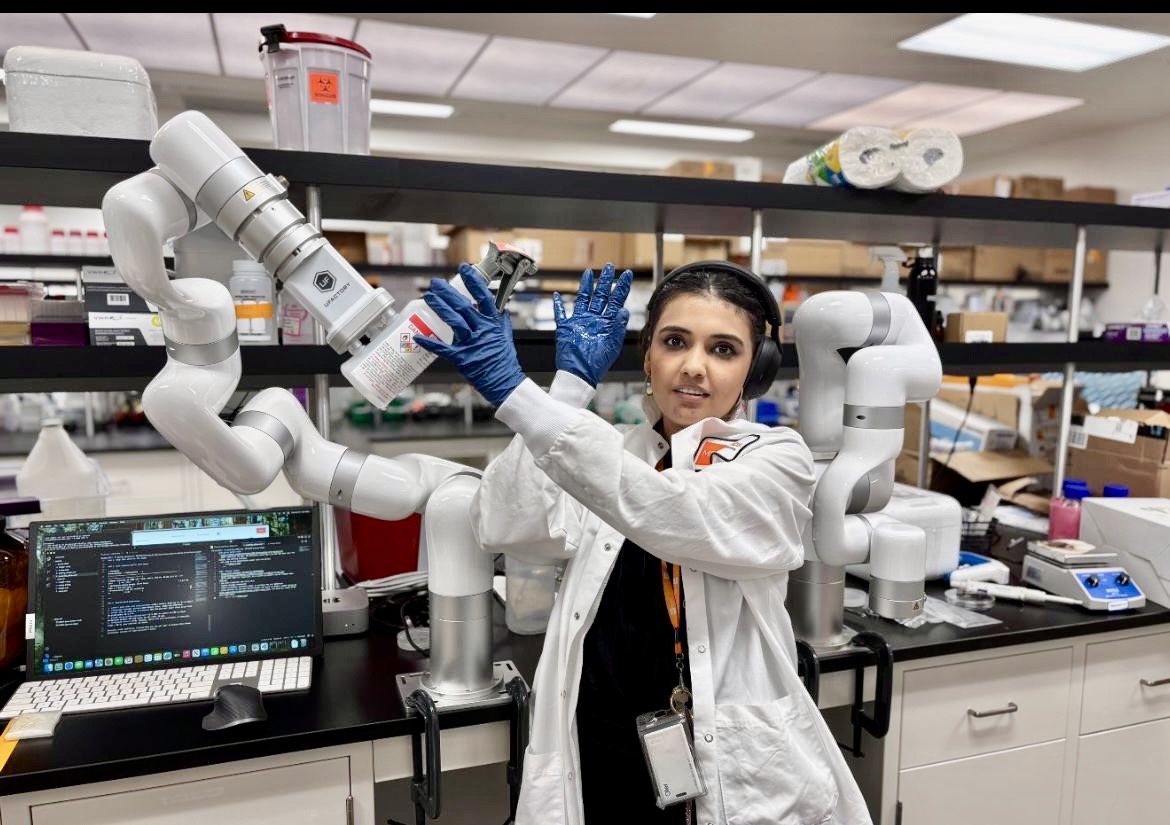
Paramita Mishra, founder and CEO of Precigenetics, is building a new way to study living cells in real time. Through the company's platform, Cell Cinema, her team aims to capture label-free, chemically resolved movies of living cells—offering researchers a dynamic view of biology that could reshape drug discovery, disease modeling, and precision medicine.
In an exclusive interview, Mishra reflects on the origins of the company, the science behind the platform, and the larger mission driving her work.
TBS: You studied computational biology and computer science at the University of Pennsylvania. What led you to start Precigenetics?
Paramita Mishra: The idea began in college while I was preparing a presentation on marine biology. I became fascinated by microscopy and started thinking about biology not as something static, but as something visual and dynamic. With my background in computational biology and machine learning, I kept coming back to one question: why are we still relying so heavily on snapshots of dead cells instead of learning from living systems in motion?
That question stayed with me. Personal health experiences also made the problem feel urgent and deeply real. Over time, the idea became Precigenetics—a company built around the belief that if we want better medicine, we need better ways to observe life as it unfolds.
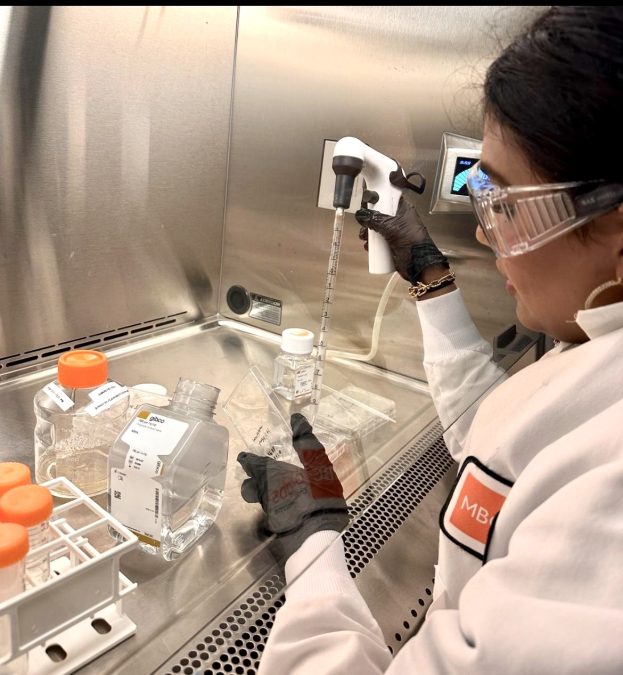
TBS: What does your platform actually do, in simple terms?
Paramita Mishra: Most conventional tools study cells after they have been stained, fixed, or destroyed. We are trying to do the opposite. Our platform is designed to observe living cells directly, without labels, and track chemical changes in real time.
Instead of a single snapshot, we generate a continuous view of cellular behavior over time. That matters because biology is dynamic. If you can see how a cell responds moment by moment, you can learn much more about disease, toxicity, and how drugs really work.
TBS: Why is that important for drug discovery?
Paramita Mishra: Drug discovery still depends too often on indirect or delayed readouts. By the time a problem shows up, you may already have lost valuable time and money. If we can provide a more direct, real-time picture of what is happening inside living cells, we can improve how researchers evaluate therapies, understand mechanisms, and identify failure earlier.
In a field with very high attrition rates, better measurement can make a meaningful difference.
TBS: What sets Precigenetics apart?
Paramita Mishra: We approach biology with a strong engineering mindset. Our team brings together expertise across photonics, machine learning, and biotech, and we are focused on building from first principles rather than making incremental changes to existing tools.
I also believe in being transparent about the learning curve of building a company. Science and startups require different instincts, and I have had to grow into that. But the mission has stayed constant: rigorous science, bold thinking, and real-world impact.
TBS: You often speak about cellular intelligence and epigenetics. How do those ideas connect to patient care?
Paramita Mishra: Cells are constantly sensing and adapting to their environment. Those dynamic changes matter, especially in areas like cancer and precision medicine. A static endpoint can miss a lot. If we can capture how cells behave over time, we may be able to detect earlier signals, better understand disease states, and support more precise therapeutic decisions.
That is where I think the real promise lies—not just in generating data, but in making biology more interpretable and useful for medicine.
TBS: What advice would you give to young founders entering biotech?
Paramita Mishra: Be willing to reach out, ask questions, and learn in public. Do not wait to feel completely ready. Biotech needs people who can combine technical rigor with imagination. And above all, stay connected to the human reason behind the work. That is what keeps you grounded.
TBS: What is your long-term vision for Precigenetics?
Paramita Mishra: We want to help build the next foundational layer of precision medicine—one that makes it possible to observe living biology in real time and use that understanding to improve diagnostics, therapeutics, and research. If we can do that well, it has the potential to change how medicine is developed.
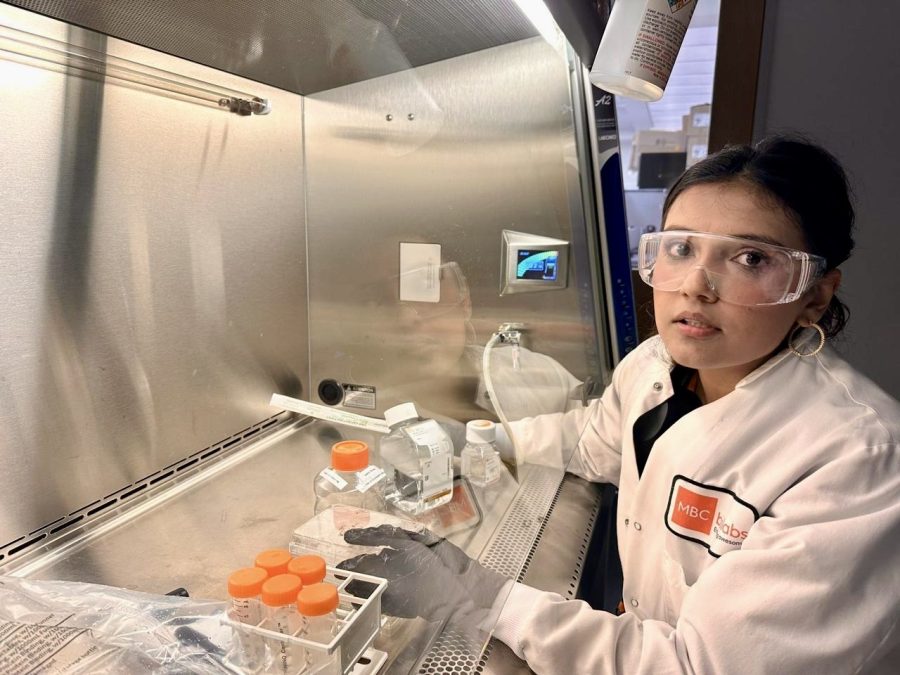
Precigenetics is based at MBC BioLabs in San Carlos, California. More information is available at precigenetics.com.

The BuckStopper, run by a group of seasoned journalists, holds the powerful accountable. The buck stops with them, as they cannot shrug off their official responsibilities.