

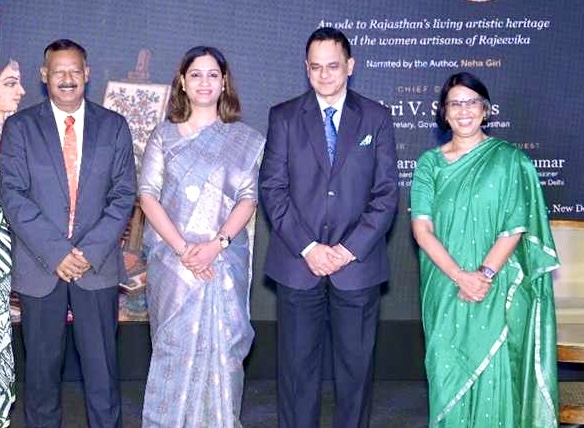
Neha Giri, a 2010 batch IAS officer of Rajasthan cadre, who is currently serving in centre as Director in Ministry of Minority Affairs, has hit the headlines for authoring an inspiring tale of artistic women and their arduous journey to success.
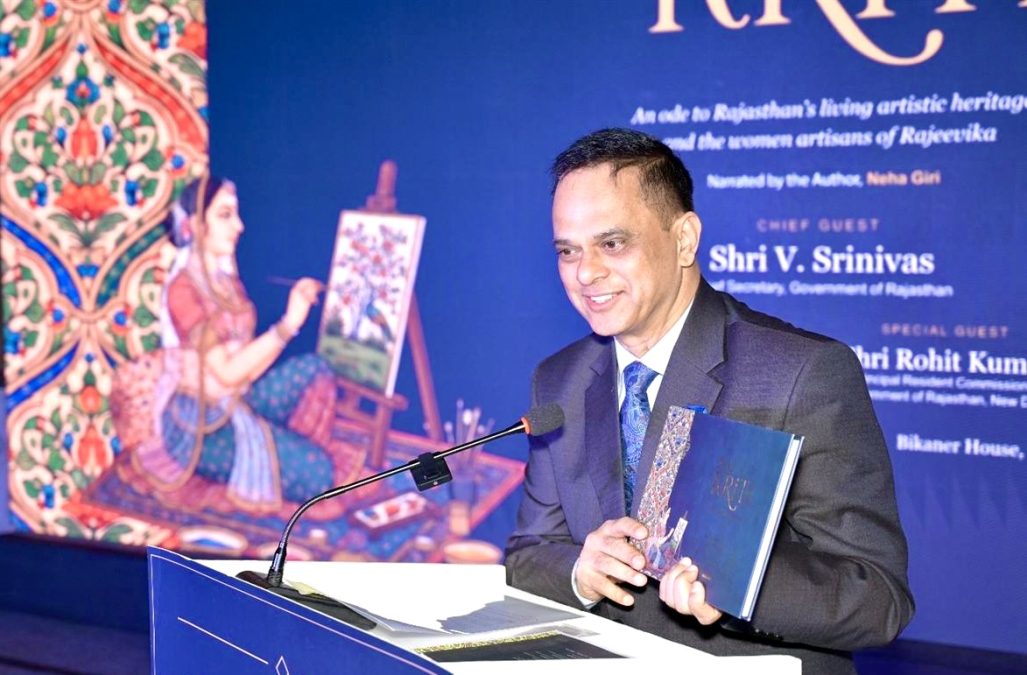
The book titled – Raj Kriti – was discussed in detail at a function in New Delhi in presence of Rajasthan Chief Secretary V Srinivas.
The book highlights the lives, traditions, artistic skills and aspirations of women who play a significant role in preserving Rajasthan's rich cultural heritage while creating new livelihood opportunities for themselves and their communities.
The author Neha Giri shared the journey behind its publication and acknowledged the collective efforts of individuals and institutions that contributed to documenting these inspiring stories.
Recalling her earlier association with rural livelihood initiatives as State Mission Director, she appreciated the contributions of Block Development Officers, community professionals, voluntary organisations, master trainers, Rajasthan Grameen Aajeevika Vikas Parishad (Rajeevika), the Rural Development Department and Bank of Baroda RSETI.
Book chronicles the success sojourn of rural women
Giri emphasised that the stories featured in the book represent years of collective commitment, grassroots participation and institutional support.
Through Different Women of Rajasthan, Neha Giri brought to the forefront the inspiring stories of women whose creativity, resilience and entrepreneurial spirit contribute significantly to the state's cultural and economic landscape.
The book goes beyond documenting traditional art forms and highlights how inherited skills can be adapted to contemporary markets, creating opportunities for individual growth and collective empowerment.
The publication is a celebration of Rajasthan's living cultural heritage, viewed through the experiences and aspirations of its women. It recognises them not only as custodians of tradition but also as artists, entrepreneurs and agents of social and economic transformation.
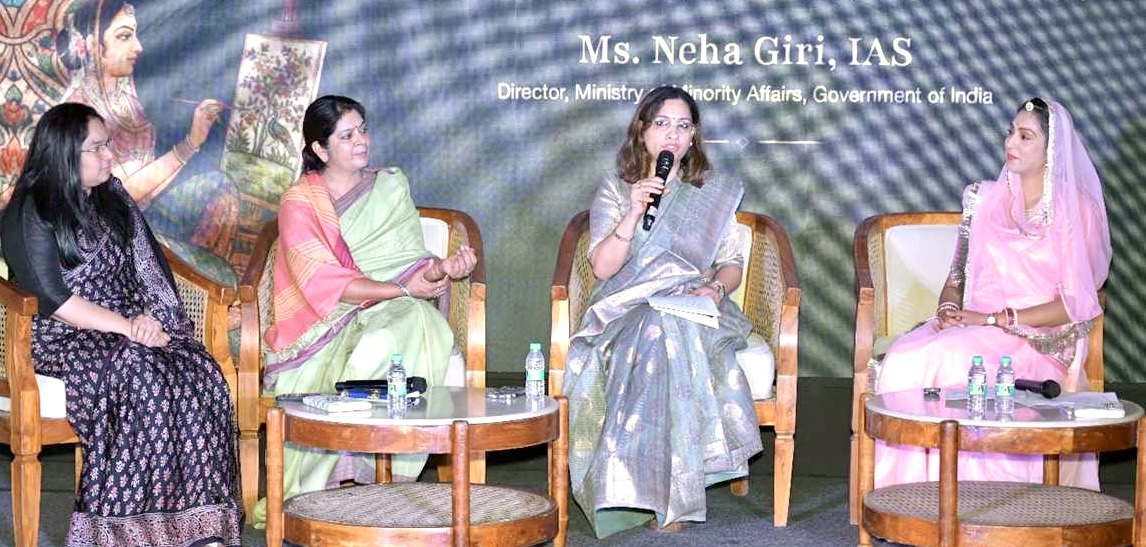
The discussion featured inspiring accounts of women who have transformed traditional art forms, inherited skills and personal interests into sustainable livelihood opportunities.
Traditional art is living heritage
Rajasthan Chief Secretary V Srinivas appreciated the initiative of bringing the achievements and experiences of women artisans into the public domain. He acknowledged the importance of documenting their journeys and providing wider recognition to their contribution towards preserving Rajasthan's cultural heritage and strengthening rural livelihoods.
The discussion focused on traditional art as a living heritage and explored ways to adapt indigenous art forms to contemporary requirements while preserving their cultural identity. The panellists highlighted the importance of skill development, educational institutions, exhibitions and improved market linkages in providing greater recognition and sustainable livelihood opportunities to women artists.
In an important initiative to strengthen market linkages, the possibility of making handcrafted products of these women artisans available through post offices was also discussed. This would provide an additional marketing platform and help connect their products with customers across a wider geographical area.
Vivek Shukla is a management graduate who has worked in corporate worked for 20 years and is now pursuing his passion — news.