

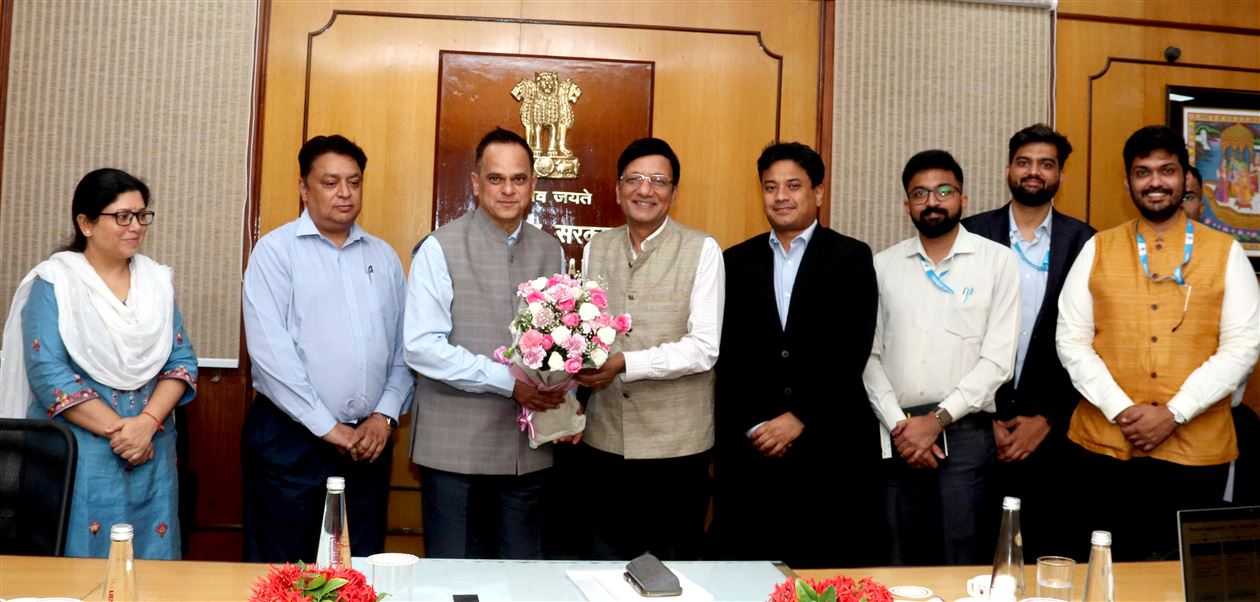
Rajasthan Chief Secretary V Srinivas is focused on making the state's administrative machinery more capable, efficient, and future-ready, in line with the goal of ‘Viksit Rajasthan@2047'.
For that Srinivas has mandated Quality Council of India (QCI), which has prepared an action plan covering administrative reforms, human resource assessment, process improvements, and digital transformation.
The QCI held a discussion on the proposed plan with Srinivas along with senior administrative officers including Principal Secretary (General Administration Department) Naveen Jain; Secretary (Department of Information Technology & Communication) Dr. Ravi Kumar Surpur; Secretary (Department of Personnel) Archana Singh; Joint Secretary (Department of Personnel) Dheeraj Kumar Singh; Joint Secretary (Finance) Pratap Singh; and CEO of Rajasthan Institute of Transformation and Innovation (RITI) Satyendra Kumar (IPS).
Srinivas said that, under the action plan, a pilot diagnostic study will be conducted across six departments in the initial phase.
Subsequently, decisions regarding cadre and operational activities, manpower norms, cadre rationalization, necessary amendments to recruitment rules, process optimization, and the framework for the HR Stack will be formulated.
“In the next phase, technical support and capacity building will be provided to the concerned departments to facilitate state-wide implementation,” he said.
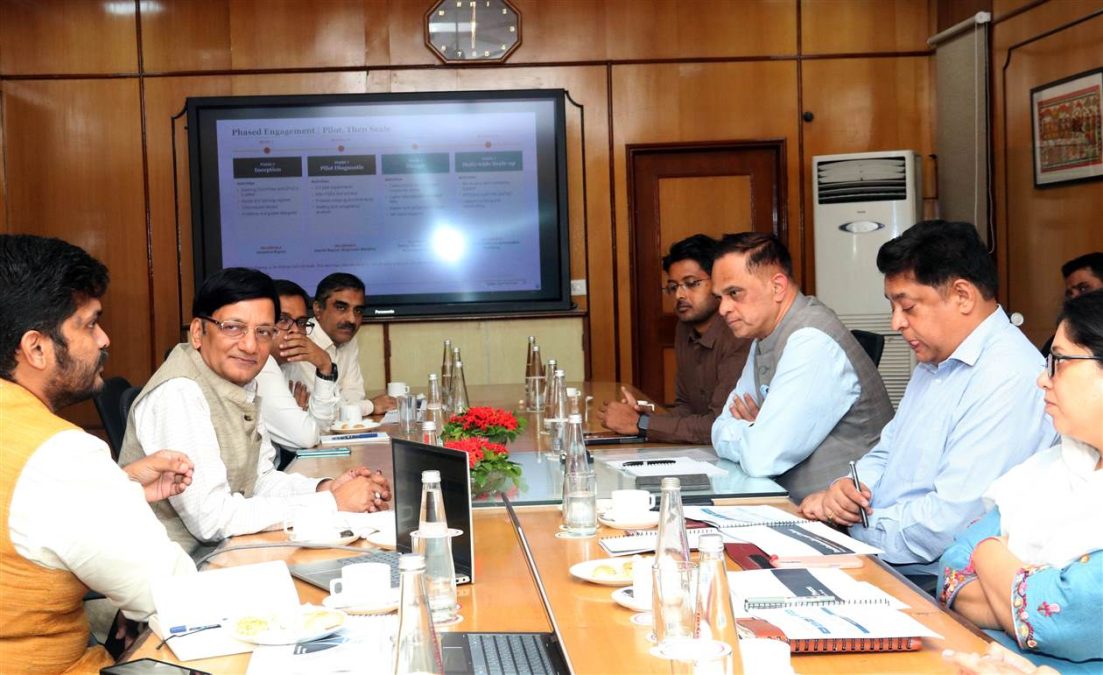
Focus on making workflows simple, time-bound, and result-oriented
QCI Secretary General Chakravarty T. Kannan proposed to make the administrative system more result-oriented through the optimal use of human resources, work methodologies, and technical systems, alongside a scientific assessment of departmental functions, organisational structures, and staff strength and competencies.
The meeting deliberated on creating standardised SOPs for repetitive tasks, eliminating redundant steps, simplifying processes, and effectively utilising digital technology and use of Artificial Intelligence. Processes will be made more efficient by assessing the time required for each task through process mapping and time studies.
There is also a proposal to define responsibility and accountability at every level using the RASIC matrix to ensure clear accountability in task execution. This will help reduce ambiguity in operations and improve inter-departmental coordination.
Synergy of the right personnel and modern technology for the right tasks
The proposed study will assess current and future human resource needs, analysing the required staff strength, skills, and competencies in alignment with departmental mandates, programs, and future tasks. Additionally, the study will review potential overlaps in functions across various levels, required competencies, and citizen-centric service delivery.

Vivek Shukla is a management graduate who has worked in corporate worked for 20 years and is now pursuing his passion — news.