

Rajasthan is fast-tracking interstate and intrastate power-transmission projects to evacuate its rapidly expanding renewable-energy generation.
Rajasthan Chief Secretary V Srinivas has directed officials to remove right-of-way hurdles that could delay critical grid infrastructure needed for swift offload of power being generated in the state.
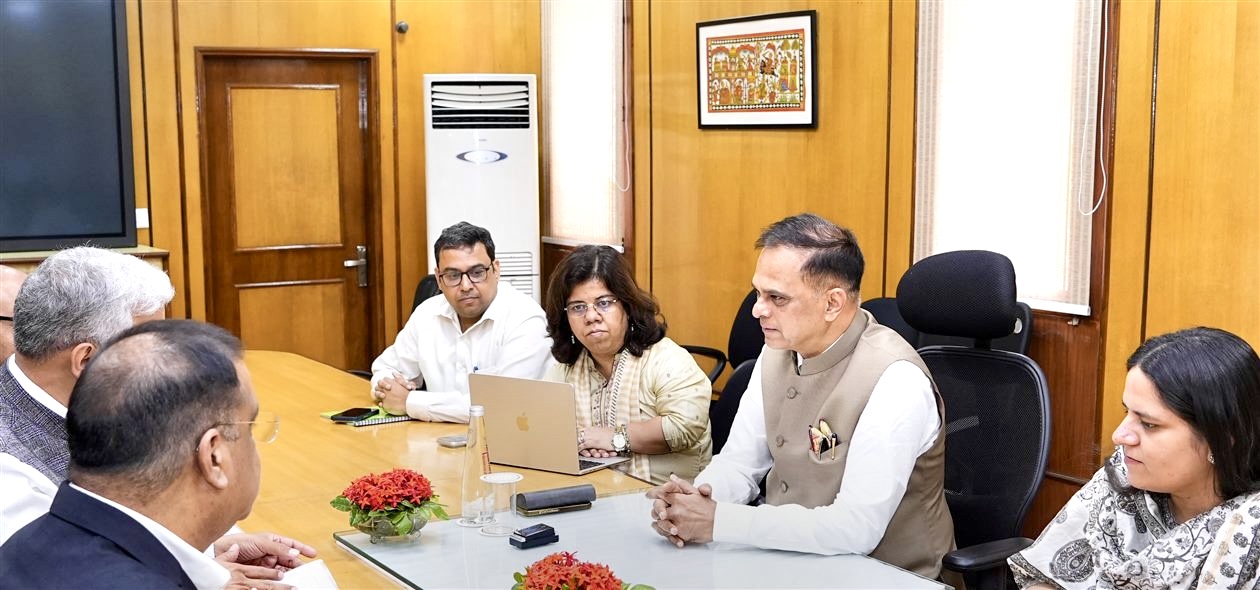
While reviewing the progress of transmission projects with senior officials of Power Grid Corporation of India Limited and the state Energy Department, Srinivas directed officials to resolve land and right-of-way issues at the earliest so that the state can fully utilise the transmission infrastructure being developed under green-energy corridor projects.
“We have asked district collectors and police superintendents to extend necessary cooperation in resolving right-of-way obstacles to ensure timely completion of pending transmission projects,” he said.
The meeting was attended by Power Grid Chairman and Managing Director V R Mohan Burra, Energy Secretary Arti Dogra, Rajasthan Renewable Energy Corporation (RREC) Chairman and Managing Director Rohit Gupta and other senior officials.
Why efficient green energy corridors are needed in Rajasthan?
The scale of the challenge is significant. Rajasthan had 44.37 GW of installed solar capacity as of August 31, 2026, according to data from the Ministry of New and Renewable Energy (MNRE). This included 38.90 GW of ground-mounted solar, 2.32 GW of rooftop solar, 2.28 GW of hybrid solar capacity and 0.87 GW of off-grid solar.
Overall, Rajasthan's renewable-energy capacity stood at 50.72 GW, including 5.69 GW of wind power, the MNRE data showed.
The state is therefore emerging as one of India's key renewable-power hubs, but the growth of generation capacity is also increasing the need for high-capacity transmission corridors to move electricity from western Rajasthan's solar-rich regions to major consumption centres elsewhere.
For Rajasthan, the transmission build-out is consequently becoming a critical piece of the renewable-energy investment cycle. Without adequate evacuation capacity, additions to generation capacity in solar-rich districts can create congestion and constrain the ability to sell power outside the state.
Power Grid seeks HVDC transmission lines
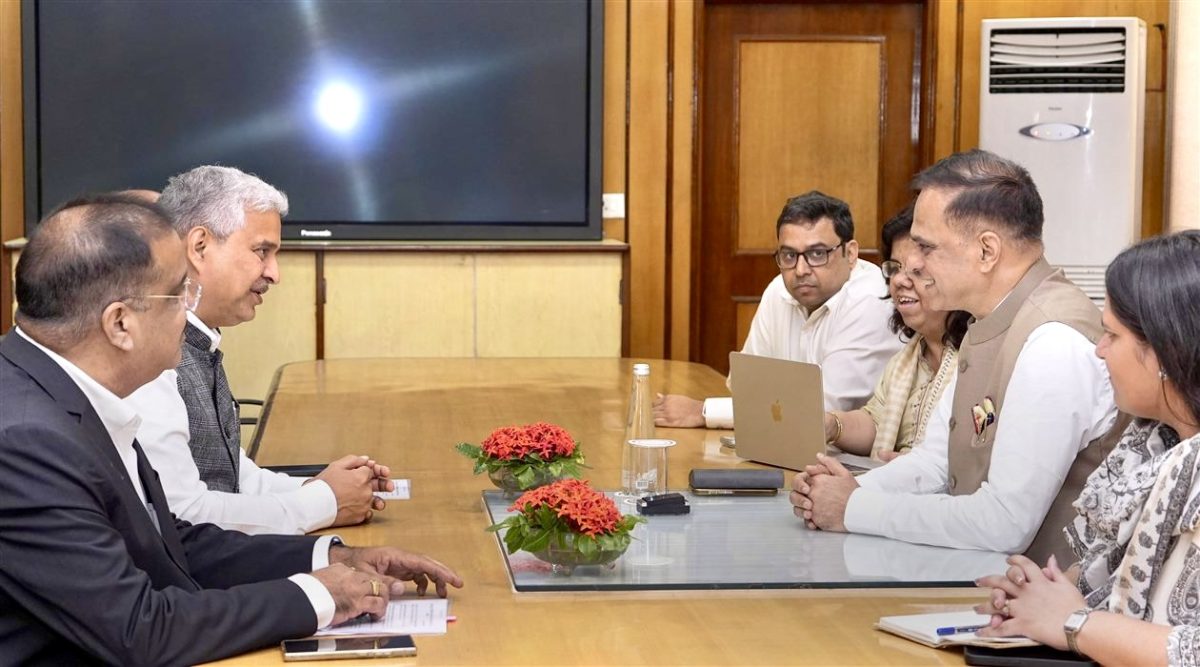
Power Grid sought land for high-voltage direct-current (HVDC) transmission lines with higher transfer capacity, aimed at evacuating electricity generated by solar parks to other states without tripping.
The requirement is particularly relevant as Power Grid is progressing with transmission infrastructure linked to the Rajasthan Renewable Energy Zone (REZ) Phase-IV, Part-5, involving a 6 GW solar project in the Barmer complex. The associated system includes an 800-kV HVDC corridor between Barmer-II and South Kalamb. Power Grid documents describe the project as a transmission system for evacuating 6 GW of solar power from the Barmer complex.
The transmission push follows several large investments in Rajasthan's renewable-energy evacuation infrastructure. Power Grid has previously commissioned projects aimed at evacuating power from renewable-energy zones in Rajasthan, including an 8.1 GW transmission system under Rajasthan REZ Phase-II Part A and connectivity for renewable projects at Bikaner, Fatehgarh-II and Bhadla-II. These projects were among schemes worth about ₹900 crore dedicated in February 2024, according to Power Grid.
RE Take on Rajasthan
- 44.37 GW: Rajasthan's installed solar capacity as of August 31, 2026
- 50.72 GW: Rajasthan's total renewable-energy capacity
- 38.90 GW: Rajasthan's ground-mounted solar capacity
- 5.69 GW: Rajasthan's installed wind capacity
- 6 GW: Solar power targeted for evacuation from the Barmer complex under the current REZ Phase-IV Part-5 transmission system
- 800 kV: HVDC transmission corridor being developed between Barmer-II and South Kalamb
- 168.04 GW: India's total installed solar capacity as of August 31, 2026
- 295.55 GW: India's total renewable-energy capacity including large hydro
Vivek Shukla is a management graduate who has worked in corporate worked for 20 years and is now pursuing his passion — news.