


By Roopanshi Ganga Kaushik
Recently, Bollywood actor Naseeruddin Shah once again raised questions about secularism. He suggested that Prime Minister Narendra Modi should put on Islamic skull cap to prove that Hindutva is truly protective and secular towards Muslims. Such challenges keep coming up often. Every time, the pressure falls on the Hindu majority to show they are tolerant. This pattern creates a difficult environment. It puts the burden of proof always on one side. Many people do this in the name of secularism. As a result, it confuses the young minds of India.
Generation Z, in particular, grows up seeing these repeated tests and debates. They get information fast through social media but often feel lost about their own history and identity.
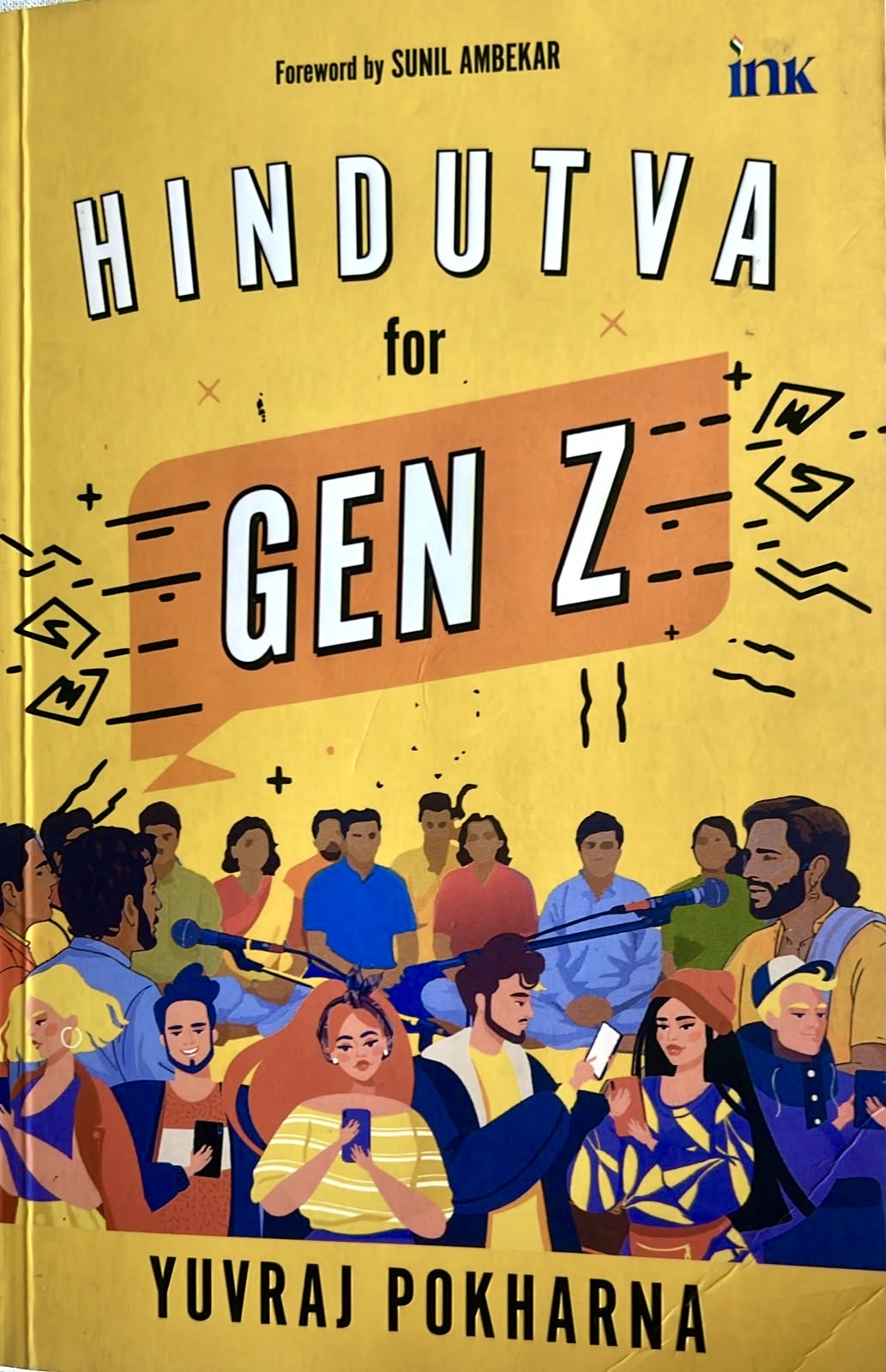
It is in this climate that a young author from Gujarat has stepped up. Yuvraj Pokharna wrote a book specially for Gen Z. His book Hindutva for Gen Z was published in April 2026. It quickly sold out in many places and became one of the top sellers in the following months. The book speaks directly to young Indians who want to understand their civilisational roots but face constant noise from headlines and online arguments.

Pokharna does not write like a college professor. He creates a simple primer. His goal is clear. He wants to explain the basic ideas, history, and culture behind Hindutva. He uses language that young people can easily understand. Many in Gen Z feel curious about their heritage. At the same time, they hesitate to talk about it openly. Public talks often reduce Hindutva to just political slogans or negative labels. This book tries to change that. It moves the discussion back to bigger questions about civilisation, identity, and historical memory.
One strong point of the book is how easy it feels to read. Pokharna avoids heavy and complex words. He writes in a friendly, conversational style. This style matches the way Gen Z learns today. They watch podcasts, YouTube videos, and short threads on social media more than thick old books. The chapters focus on topics that matter right now. These include temple restoration, the real meaning of secularism, issues of caste, cultural identity, Swadeshi ideas, and how Indian civilisation has continued through time. Because of this focus, the book feels fresh and useful for today's young readers.
Pokharna does not try to push readers with loud emotions. Instead, he invites them to check their assumptions. Many young people pick up ideas from school, media, or online feeds without deep thought. The author asks simple questions. Why did certain stories become the main ones? Why do other views stay on the side? He encourages readers to look into ideas properly instead of just accepting quick opinions. For a generation that sees only short clips and sound bites, this approach is very helpful. It builds the habit of thinking carefully.
The main theme in the book is that many young Indians have started feeling apologetic about their own past. Pokharna points out an interesting difference. In Western countries, people usually celebrate their historical traditions with pride. But in India, especially in cities, many young Hindus hold back. They fear being called backward or communal if they show pride in their culture. The book works to fix this problem. It presents Hindutva not just as politics but as a way to understand civilisational continuity, build cultural confidence, and develop national awareness. It helps readers feel comfortable with their inheritance.
The author clearly knows his audience well. Generation Z likes short and clear arguments. They want examples from current life. They prefer direct language. Pokharna delivers most of these things successfully. He does not assume readers already know a lot of history. He explains every important concept in small, easy sections. This makes the book good even for those who are new to these debates. People encountering these topics for the first time will find it approachable.
At the same time, the book has some limits. Its simple style sometimes reduces deeper discussion. Readers who want full scholarly details or long talks with opposite views may feel it is selective. The book clearly comes from a particular perspective. It does not try to act as a completely neutral report that covers every possible thought. This is not a big problem. Many good books take a strong stand. They argue for a point. Still, it is wise for readers to check other books that show different sides. This helps get a fuller picture.
Yet it would be wrong to judge Hindutva for Gen Z only by strict academic rules. The book never aimed to be the final expert text on the subject. Its real purpose is different and important. It wants to make a heavily debated idea understandable for young Indians. Most of them have met Hindutva only through news, political speeches, or online fights. They rarely get patient explanations. Pokharna fills this gap nicely.
In the end, the book achieves a lot of what it set out to do. It gives Gen Z a useful vocabulary. With this, they can join discussions about Hindutva in a better way. The book does not demand that everyone must agree. It asks readers to become curious. It does not push old beliefs. It invites young people to explore their civilisational past with fresh eyes and more confidence.
Today, many ideological fights turn into quick hashtags and simple opposite sides. In such a time, this book stands out. It tells readers that good understanding must come before final judgment. Will it change every mind? That depends on each reader. But it surely makes the conversation wider. It brings one of India's most talked-about ideas closer to the generation that will lead the country's future.
The timing of the book is also right. Published in 2026, it arrives when debates on identity, culture, and politics continue strongly across India. Social media keeps these issues alive every day. Young people need tools to think independently. Pokharna's work provides one such tool. It is not perfect for everyone, but it serves its main purpose well.